
Strong winds have a habit of causing damage that isn’t always obvious at first glance.
A roof might look perfectly fine from the ground, yet small shifts or loosened materials could already be in place. It’s often these subtle issues that develop quietly over time and lead to more noticeable problems later on.
Even after what seems like a relatively minor storm, it may still be worth taking a closer look. Early signs of damage can be easy to miss, especially if you’re not quite sure what to look for.
Spotting these issues sooner rather than later can make a noticeable difference in both repair costs and long-term roof performance.
Why Wind Can Be More Damaging Than It Appears
Wind doesn’t always need to rip tiles straight off to cause trouble. In many cases, it works by lifting and slightly shifting materials, weakening their position without fully dislodging them.
Over time, this repeated movement may begin to affect the roof’s structural integrity.
What makes this tricky is that the damage can build gradually. Areas that have already been repaired or older sections of the roof are often more susceptible.
A tile that’s only slightly out of place today could become a leak point the next time heavy rain arrives.
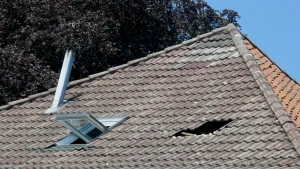
Visible Signs of Roof Damage From Ground Level
One of the simplest ways to check for issues is by observing the roof from a safe distance.
Look out for missing or slipped tiles, uneven lines along the roof surface, or anything that appears slightly out of alignment. These changes might seem minor, but they can suggest that something has shifted.
It’s also worth checking the ground and surrounding areas. Pieces of tile, mortar, or other debris in the garden or driveway may point to damage above.
Gutters filled with unusual fragments can be another sign that the roof has taken a bit of a hit during strong winds.
Subtle Warning Signs Inside the Property
Not all roof damage is visible from the outside. Inside the home, you might start to notice damp patches forming on ceilings or along upper walls.
These can appear slowly and may initially look like minor discolouration rather than an obvious leak.
In some cases, there may be a slight draught in the loft or attic space. Wind-driven rain can find its way through small gaps created during a storm, even if the roof still looks intact.
These internal signs often appear after the weather has settled, which can make them easy to overlook.
Checking Gutters, Fascias, and Surrounding Areas
The roof doesn’t work in isolation, and wind can affect more than just tiles. Gutters, fascias, and soffits can all become loose or misaligned during strong gusts.
You might notice sagging sections, detached joints, or brackets that no longer sit securely.
These elements play a key role in directing water away from the property.
If they’ve been disturbed, it can lead to water running in places it shouldn’t, which may eventually impact the roof structure itself. Keeping an eye on these areas is just as important as checking the roof covering.

Areas of the Roof Most at Risk
Certain parts of the roof tend to take the brunt of strong winds. Ridge tiles, for example, are often more exposed and can become loose if the mortar begins to weaken.
Edges and corners are also vulnerable, as wind can get underneath and lift materials more easily.
Other areas, such as valleys and around chimneys, can develop issues too. These sections often involve more complex detailing, which means there are more points where something could shift or fail.
Even a small movement in these areas may eventually lead to water ingress.
When to Call a Professional Roofer
If you suspect damage but can’t clearly see the extent of it, it may be time to bring in a professional roofer.
Climbing onto a roof without the right equipment can be risky, and it’s not always easy to spot underlying problems from a quick look.
A roofer will usually be able to identify issues that aren’t immediately visible. They can assess whether a repair is straightforward or if something more involved is needed.
Acting early often prevents the situation from becoming more complicated and expensive.

Preventing Further Damage After a Storm
Once you’ve identified a potential issue, taking action fairly quickly can help limit further damage.
Clearing out gutters, removing debris, and monitoring any changes are simple steps that can make a significant difference in the short term.
In some situations, temporary roof repairs might be needed to keep the property protected until proper work can be carried out.
Arranging a professional inspection soon after a storm may also help catch anything that hasn’t yet become obvious, reducing the risk of ongoing problems.
Conclusion
Roof damage after heavy wind isn’t always dramatic or immediately visible. In many cases, it starts with small changes that gradually develop into more serious issues.
Taking the time to check for early signs can help you stay ahead of potential problems.
By paying attention to both external and internal indicators, you’re more likely to catch damage before it worsens.
A cautious approach, combined with timely professional advice when needed, can help keep your roof in good condition and avoid unnecessary costs down the line.