
When a roof is replaced, most people think about tiles, slates, felt, battens and the main roof covering. Gutters, fascias and soffits can seem like separate details, but they sit right at the point where the roof finishes and rainwater leaves the building.
That means roofline components often need careful attention during the job. A good replacement roof should not only keep rain out from above, it should also move water away cleanly, protect the edges of the roof and leave the guttering working as it should.
Why gutters and fascias matter during roof replacement
Gutters, fascias and soffits are part of the roofline. They do not usually form the main waterproof layer of the roof, but they help protect the vulnerable edges where the roof meets the outside walls.
The fascia board supports the bottom edge of the roofline and usually carries the guttering. The soffit covers the underside of the roof overhang. Gutters collect rainwater from the roof and guide it into the drainage system. If any of these parts are loose, rotten, blocked, poorly fixed or set at the wrong angle, a new roof can still suffer from avoidable water problems.
During a roof replacement, the roof covering is stripped back and the lower edges of the roof are exposed. This gives the roofer a much clearer view of the condition of the roofline than they would usually have from ground level. It is a sensible time to check whether the fascias can continue doing their job, whether the soffits are sound and whether the gutters will sit correctly once the new roof covering is installed.
This does not always mean everything needs replacing. In many cases, gutters and fascias can be protected, temporarily adjusted and refitted. In other cases, replacing tired roofline components at the same time as the roof can prevent future leaks, staining, damp patches and poor rainwater flow.
What usually happens before work starts
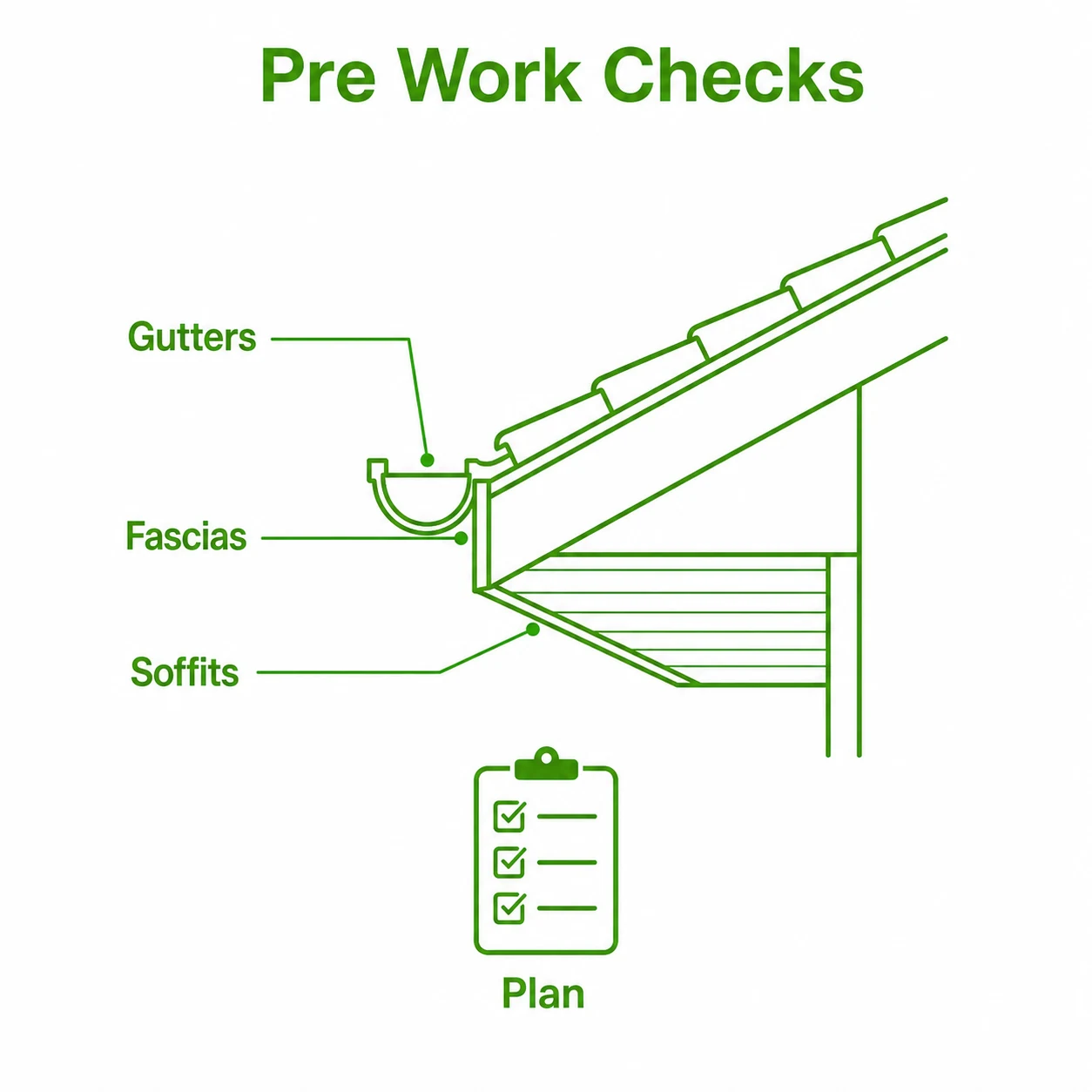
Before roof replacement work begins, the roofline should be inspected as part of the wider assessment. The aim is to understand what can be retained, what may need adjustment and what is already showing signs of failure.
A roofer may look for gutters that are sagging, cracked, blocked or pulling away from the fascia. They will also check whether water is flowing towards the outlet or pooling in sections. Fascias may be checked for soft timber, movement, staining, gaps, old fixings and signs that the gutter brackets no longer have a firm hold. Soffits may be assessed for ventilation, damage, loose sections or signs of nesting and moisture.
This early check helps avoid surprises once the roof covering has been removed. It also allows the homeowner to understand whether roofline repairs should be included as part of the same programme of work. If there are concerns before replacement starts, a professional assessment can confirm what is really happening rather than relying on guesswork. Acorn Roofing also explains what a wider roofing check can involve in its guide to what happens during a professional roof inspection.
Planning this properly matters because the gutter line must work with the finished roof. New tiles, slates, underlay, battens and edge details all need to direct rainwater into the gutter rather than behind it, over it or into the roofline.
How gutters are protected, removed or refitted
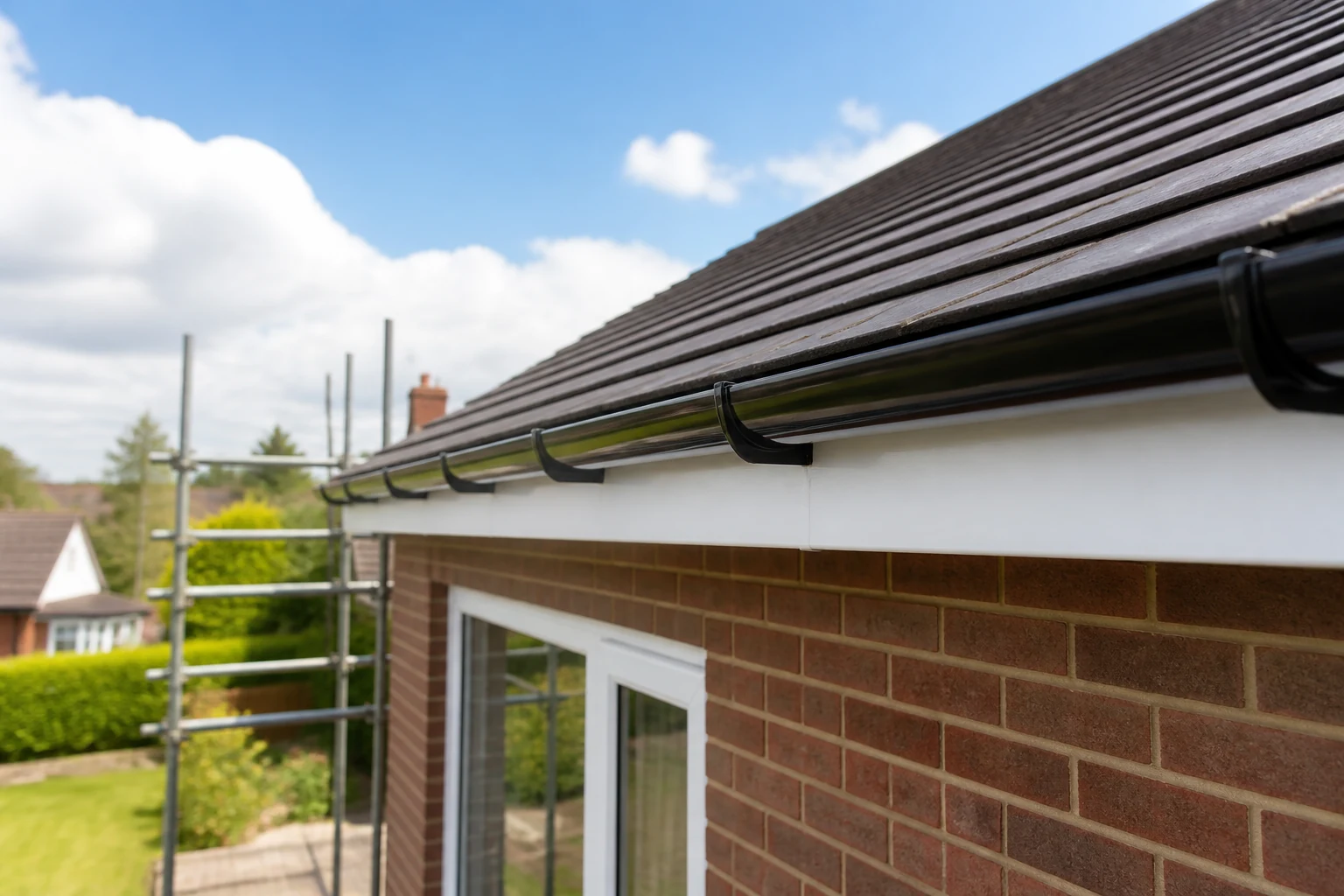
Gutters are often one of the first roofline items considered when replacement work begins. Depending on the condition and access required, they may be left in place and protected, temporarily removed, or replaced as part of the job.
If the gutters are sound and do not obstruct the work, they may simply be protected while the roof is stripped and renewed. Roofers will take care around brackets, joints and outlets because these parts can be disturbed if debris falls heavily or if materials are moved carelessly near the roof edge.
In some cases, the gutters need to be removed temporarily. This can make it easier to work on the eaves, replace fascia sections, fit new felt support trays or correct the lower edge of the roof. Once the roof covering is complete, the guttering can be refitted, aligned and tested so water runs towards the outlet.
If the guttering is cracked, badly stained, leaking at joints or no longer holding its shape, replacement may be the better option. A new roof sheds water efficiently, so weak gutters can quickly show their age after the work is finished. The same applies where previous guttering was set too low, too high or at the wrong fall.
Blocked gutters can also hide problems until heavy rain arrives. Leaves, moss and roof debris can stop water moving freely and cause overflowing at the eaves. For more detail on why this matters, Acorn Roofing has a helpful guide to the problem with clogged gutters.
When fascias and soffits should be replaced
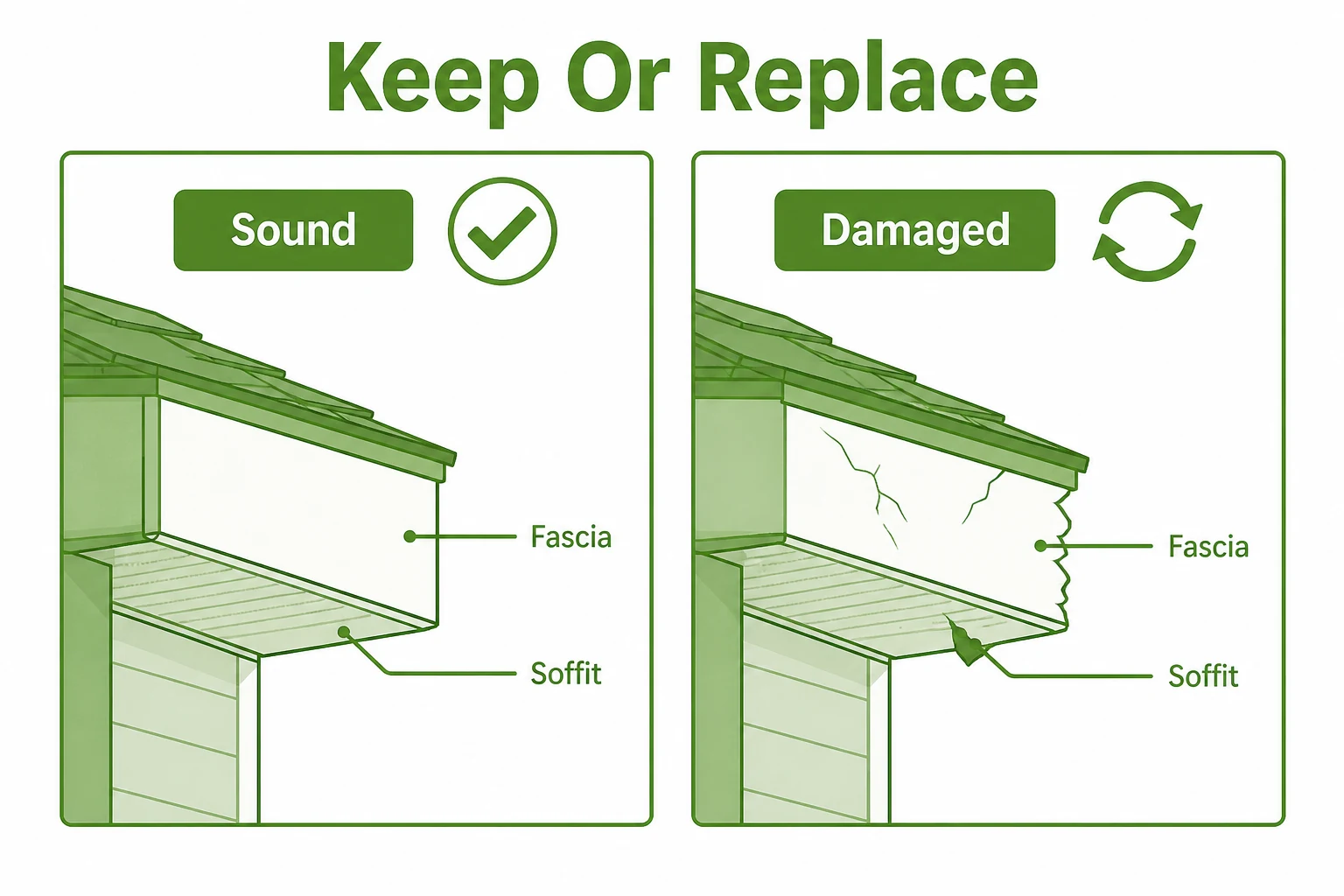
Fascias and soffits do not automatically need replacing during every roof replacement, but the job creates a practical opportunity to inspect them properly. If they are in good condition, well fixed and suitable for the new roof edge, they may be retained.
Replacement becomes more likely when fascia boards are rotten, split, bowed or no longer able to hold gutter brackets securely. A gutter fixed to a weak fascia can drop out of line, which affects water flow and increases the chance of leaks at joints and corners. Water can then run down walls, soak into timber or collect where it should not.
Soffits should also be checked carefully. Damaged soffits can leave the underside of the roofline exposed. Poor ventilation can contribute to condensation issues in the roof space, while loose or broken sections can let in draughts, insects and wind driven rain. If soffits are being renewed, ventilation should be considered as part of the work rather than treated as an afterthought.
Coordinating fascias and soffits with the roof replacement helps the finished roof work as one system. The lower edge of the roof covering, the felt or membrane, the fascia height and the gutter position all need to line up correctly. When they do, rainwater drops cleanly into the gutter, timber is better protected and the roofline has a neater, more reliable finish.
It can also be more efficient to complete this work while access is already in place. That does not mean replacing parts unnecessarily. It simply means that if fascias or soffits are close to the end of their useful life, doing them with the roof can prevent separate disruption later.
How roof edge details affect rainwater run off
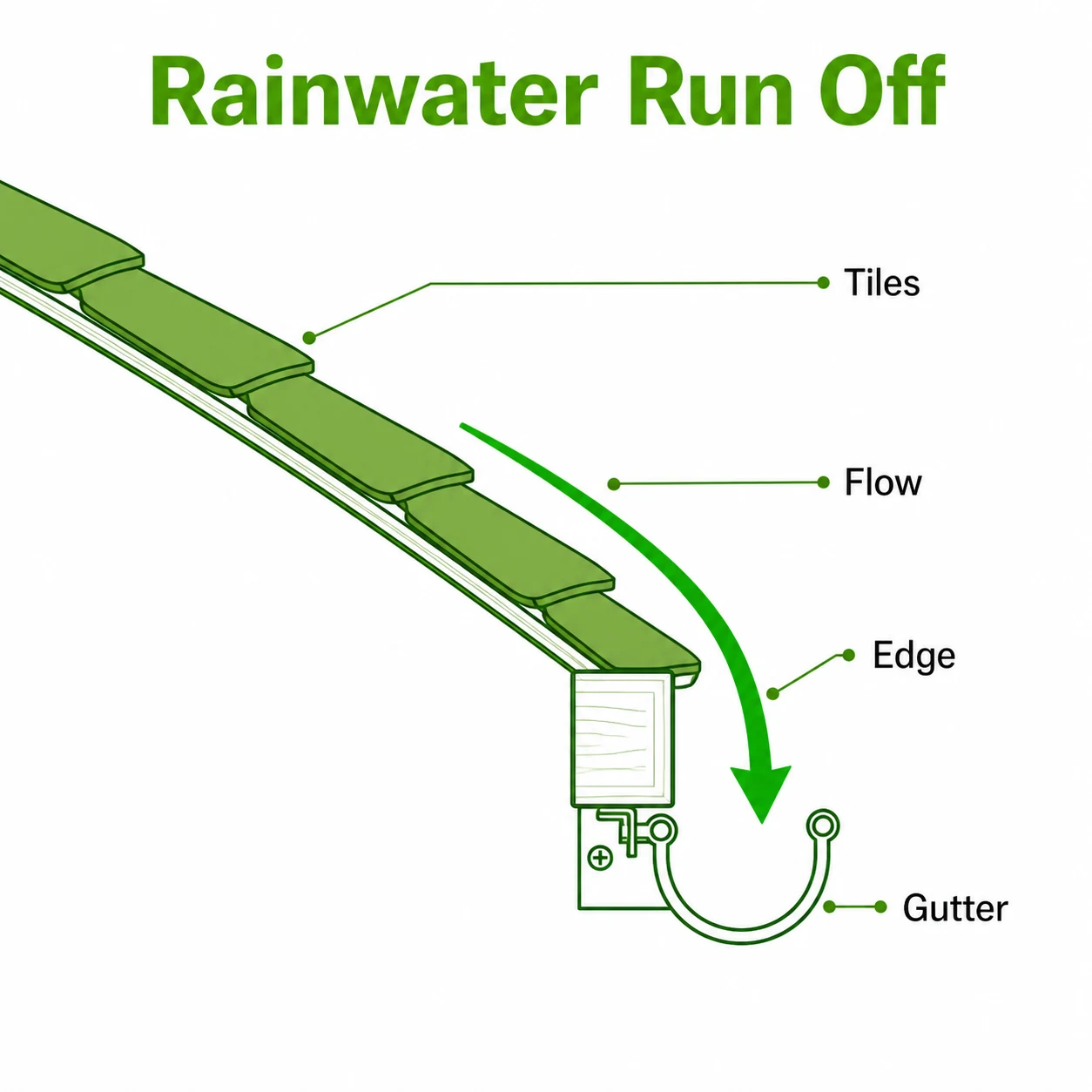
The edge of the roof is one of the most important areas for rainwater management. Water should travel down the roof covering, pass over the eaves detail and land inside the gutter. If that chain is broken, problems can appear even when the main roof covering is new.
One common issue is water running behind the gutter. This can happen if the bottom edge of the underlay is not supported correctly, if the gutter sits too far away from the roof edge, or if old roofline components have moved out of position. Over time, water behind the gutter can stain walls, affect fascia boards and create damp conditions around the eaves.
Another issue is overshooting. If the roof pitch, tile profile or gutter position causes heavy rain to shoot past the gutter, water can fall where it is not wanted. Correct gutter height, bracket spacing and alignment all help reduce this risk.
On tiled and slate roofs, the eaves course needs particular care because it is where the roof covering begins. On flat roofs and fibreglass roofs, edge trims and outlets play a similar role by directing water away from the roof surface. The details differ, but the principle is the same: the roof and rainwater goods must be designed to work together.
Gutters are not just an accessory at the edge of the building. They protect walls, foundations, fascias and the roof structure by controlling where rainwater goes. Acorn Roofing covers this in more depth in its article on the role of gutters in protecting your roof.
What homeowners should ask before the job begins
A roof replacement is a good time to ask clear, practical questions about the roofline. You do not need technical knowledge, but you should understand what is included and how the gutters, fascias and soffits will be handled.
Useful questions include whether the existing guttering will stay in place, be temporarily removed or be replaced. You can also ask whether the fascias are strong enough to support the guttering, whether soffit ventilation is adequate and whether any edge trays, trims or support details are being installed as part of the roof finish.
It is also worth asking how debris will be kept out of the gutters during the work and whether the gutters will be checked after completion. Even when gutters are retained, they should be left clear, aligned and ready to carry water away from the new roof.
A clear scope makes the project easier to understand. It helps separate essential roof replacement work from optional improvements and it makes sure the finished result performs properly. For most homeowners, the ideal outcome is simple: a sound new roof, secure roofline components and guttering that copes well when the weather turns.
- Gutters, fascias and soffits should be checked as part of roof replacement planning because they affect how water leaves the roof.
- Existing gutters may be protected, temporarily removed, realigned or replaced, depending on their condition and the access needed.
- Fascias must be strong enough to support gutter brackets, especially once a new roof is shedding water efficiently.
- Soffits should be sound and properly ventilated so the roofline remains protected beneath the eaves.
- Coordinated roofing and roofline work helps reduce the risk of leaks, staining, damp and poor rainwater run off.
Frequently asked questions
Do gutters always need replacing with a new roof?
No. If the gutters are in good condition, correctly aligned and suitable for the finished roof edge, they can often be retained. They may still need to be protected, cleared, adjusted or refitted during the work.
Can fascias be repaired instead of replaced?
Sometimes, yes. Localised damage may be repairable if the rest of the fascia is sound. If boards are rotten, bowed or unable to hold gutter fixings securely, replacement is usually the more reliable option.
Why do gutters leak after roof work?
Leaks can happen if old joints are disturbed, debris blocks the flow, brackets move, or the gutter is not aligned with the new roof edge. A proper final check helps make sure water lands in the gutter and runs towards the outlet.
Should soffit ventilation be checked during roof replacement?
Yes. Roof replacement is a good time to confirm that the roof space has suitable ventilation. Good ventilation helps manage condensation and supports the overall performance of the roof.
Planning a roof replacement
If you are considering a new roof, Acorn Roofing can assess the roof covering, gutters, fascias and soffits together so the finished work is practical, tidy and built to manage rainwater properly.