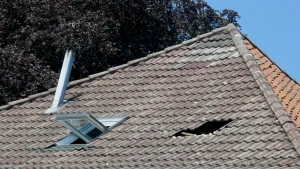
Autumn is the season when minor roofing weaknesses are most likely to reveal themselves. Persistent rain, stronger winds, falling leaves, and bigger temperature swings all arrive in quick succession. If your roof has a cracked tile, a tired verge, aged felt underlay, or blocked guttering, the autumn weather will usually find it. The objective now is simple: identify risk early, act professionally, and keep water out of the building fabric.
This guide explains what matters, why it matters, and how professional roofing care helps you avoid disruption and expense through the colder, wetter months. Safe, long-lasting roofing repair requires the right access, training, and materials.
Why Autumn Exposes Roofing Weaknesses
Roofs are designed to shed water rapidly.
Anything that slows or diverts that flow increases risk. Autumn adds three complicating factors:
Volume of water – Heavier, longer periods of rain test every junction: tiles/slates and flashings, valleys, parapets, and rooflight perimeters.
Wind + rain – Lateral rain driven under laps, into loose ridges, and across porous mortar beds can reach areas that seem fine in summer showers.
Organic debris – Leaves, twigs, seeds and moss collect in gutters, valleys and behind chimneys. Standing water follows, then capillary action into laps, then damp timbers.
A sound roof manages all three. A roof with minor defects does not — and small issues soon become leaks, staining, timber decay, insulation saturation and mould.

Pitched Roofs: What Professionals Look For
Not all pitched roofs are alike, but the risk points are consistent.
Tiles, Slates and Fixings
Cracked, slipped or delaminating units allow direct ingress. A professional will assess not only the visible damage but also the underlying fixings (nails, clips) and the battens supporting them.
Nail fatigue (particularly on older slate roofs) can present as random slips. The remedy may be localised, or in some cases it indicates a wider renewal requirement.
Ridge, Hips and Verges
Mortar-bedded ridges and verges lose bonding over time. Modern practice often prefers dry-fix systems for secure mechanical restraint and ventilation where appropriate. A roofer will check tightness, alignment and the integrity of any dry-fix components.
Hip irons and hip tiles are checked for movement, fractures and correct overlap.
Valleys and Abutments
Valley troughs (GRP, lead, or concrete) must be clear and correctly lapped with adjacent tiles/slates. Accumulated debris here is a classic cause of internal leaks.
Flashings at abutments (lead or proprietary systems) are inspected for splits, inadequate cover, or failed pointing. Where lead is present, expansion and contraction can open joints; a professional repair maintains the correct detailing and weathering.
Chimneys and Rooflights
Chimney stacks are checked from cap to flashing: pots, flaunching, brickwork, and any vertical cracks.
Rooflights require sound seals and compatible flashing kits; sealants are never a substitute for proper detailing.
Underlay and Ventilation
The roof’s secondary defence is the underlay (felt or breathable membrane). If it has sagged, torn, or is directing water behind the fascia, that must be addressed.
Ventilation is checked against the roof build-up to prevent condensation, especially once heating goes on in autumn.
Flat Roofs: Autumn Priorities
Flat roofs have a different set of risks, particularly with ponding and outlets.
Membranes and Joints
Felt (bituminous), EPDM, TPO, and GRP each have specific detailing rules at edges, laps and penetrations. A professional will examine seams, corner details and upstands, paying close attention to blistering, splits and UV wear.
Upstand height matters: insufficient height at abutments or rooflights invites backwater ingress in heavy rain.
Falls and Drainage
A flat roof doesn’t need to be perfectly level; in fact, it shouldn’t be. Designed falls carry water to outlets. If ponding persists 48 hours after rainfall, that’s a sign of deflection, inadequate falls or blocked outlets — all issues for a roofer to resolve.
Outlets, Gutters and Parapets
Internal outlets and hoppers must be clear and properly bonded to the membrane.
Parapet walls need reliable cappings and well-detailed lead or membrane flashings to prevent damp tracking.
Roofline and Rainwater Goods
The roofline is integral to weathering and ventilation.
Fascias and soffits should be sound, secure and — if ventilated — free of obstruction. Ventilation prevents condensation in the loft space.
Gutters must run true, with correct fall to outlets. Joints, brackets and stop-ends are inspected for leaks or distortion.
Downpipes should be clear and properly connected to gullies; displaced shoes and cracked sections are common culprits in damp patches.
Insulation, Condensation and Energy Efficiency
Good insulation reduces heat loss, but it must work with ventilation. Autumn brings cooler nights and warm interiors — the perfect recipe for condensation if moisture cannot escape.
Loft insulation should be continuous but not compressed under the rafters or blocking eaves ventilation.
Vapour control within warm roof constructions is essential to prevent interstitial condensation.
A professional roofer understands how the whole build-up works together and will recommend adjustments that improve energy performance without trapping moisture.
Early Warning Signs Homeowners Can Spot (No Ladders Required)

Stains on ceilings near chimney breasts, valleys, or rooflight edges
Musty odours in lofts or bedrooms after rain
Overflowing or visibly sagging gutters during a downpour
Grit from tiles (surface finish) accumulating in gutters or at the base of downpipes
Daylight visible through the loft at eaves or ridge where it shouldn’t be
Damp patches on external walls beneath gutter lines
If you notice any of the above, organise a professional inspection promptly. Delay rarely makes roofing problems cheaper.

What a Professional Autumn Roof Inspection Should Include
A good roofer will:
Assess access safely with appropriate equipment and controls.
Survey the roof coverings (pitched and/or flat) and key junctions.
Check roofline and rainwater goods for alignment, leaks and blockages.
Inspect flashings, valleys and penetrations for integrity and detailing.
Review the loft space (where accessible) for signs of ingress, condensation and insulation issues.
Photograph findings and provide a written, prioritised plan: urgent weather-tightness issues, recommended maintenance, and longer-term improvements.
Crucially, repairs should follow manufacturer guidance and relevant British Standards (e.g., BS 5534 for slating and tiling; BS 6229 and BS 8217 for flat roofs), with correct materials used for compatibility and durability.
Avoiding Common Autumn Pitfalls
Temporary fixes that become permanent – Tape or mastic over a failed flashing only postpones the problem. Lasting repairs require proper detailing.
Ignoring ventilation – Stopping a leak but trapping moisture leads to mould and timber decay. Always consider airflow.
Mixing incompatible materials – For example, bitumen and certain plastics don’t play well together. Professionals select systems designed to work as one.
Deferring minor works – Re-bedding a few metres of ridge, replacing a handful of slates, or clearing a valley now is far more cost-effective than repairing ceilings and insulation later.
Planning Ahead: Maintenance, Warranty and Insurance
Autumn is an ideal time to establish a planned maintenance routine:
Annual inspection (or biannual for complex roofs or heavy tree coverage).
Gutter clearing scheduled after leaf-fall and, where needed, in spring.
Documentation of repairs and materials used — valuable for warranties and when speaking to insurers after storm events.
Before/after photographs to verify condition over time.
Well-documented professional maintenance can support insurance claims where storms exacerbate pre-existing but managed risks.
When Urgent Attention Is Required
Book immediate professional help if you experience any of the following:
Active water ingress during or just after rainfall
Movement or detachment of ridges, hips, or verges visible from the ground
Blistering or tearing on a flat roof membrane that has recently appeared
Persistent ponding near an outlet or upstand
Sudden internal staining around rooflights or chimneys
Fast, correct action prevents secondary damage to plaster, electrics, flooring and contents.
Ready to Protect Your Home? Speak to Acorn Roofing Service
If you want peace of mind heading into the colder months, arrange a professional autumn roof inspection with Acorn Roofing Service. We handle pitched and flat roofs, roofline components, gutters, valleys, chimneys and rooflights with care and precision, and we’ll give you a clear plan that prevents small defects becoming major repairs.
Comprehensive surveys with photographic evidence
Targeted, durable repairs and preventative maintenance
Transparent recommendations aligned to British Standards and manufacturer guidance
Keep water out, protect your interior, and maximise energy efficiency through the winter. Contact Acorn Roofing Service today to book your autumn roof check and get expert help that lasts.
Organic debris – Leaves, twigs, seeds and moss collect in gutters, valleys and behind chimneys. Standing water follows, then capillary action into laps, then damp timbers.