
A missing roof drip edge can look like a small detail, but it can change the way rainwater leaves your roof. Instead of dripping cleanly into the gutter, water can curl back underneath the edge of the roof covering and start soaking the materials it was meant to avoid.
That is why drip edge problems often show up as damp fascias, stained soffits, leaks near the eaves or gutters that never seem to cope properly. Understanding what the drip edge does can help you spot early warning signs and know when it is time to ask a roofer to take a closer look.
What a roof drip edge actually does
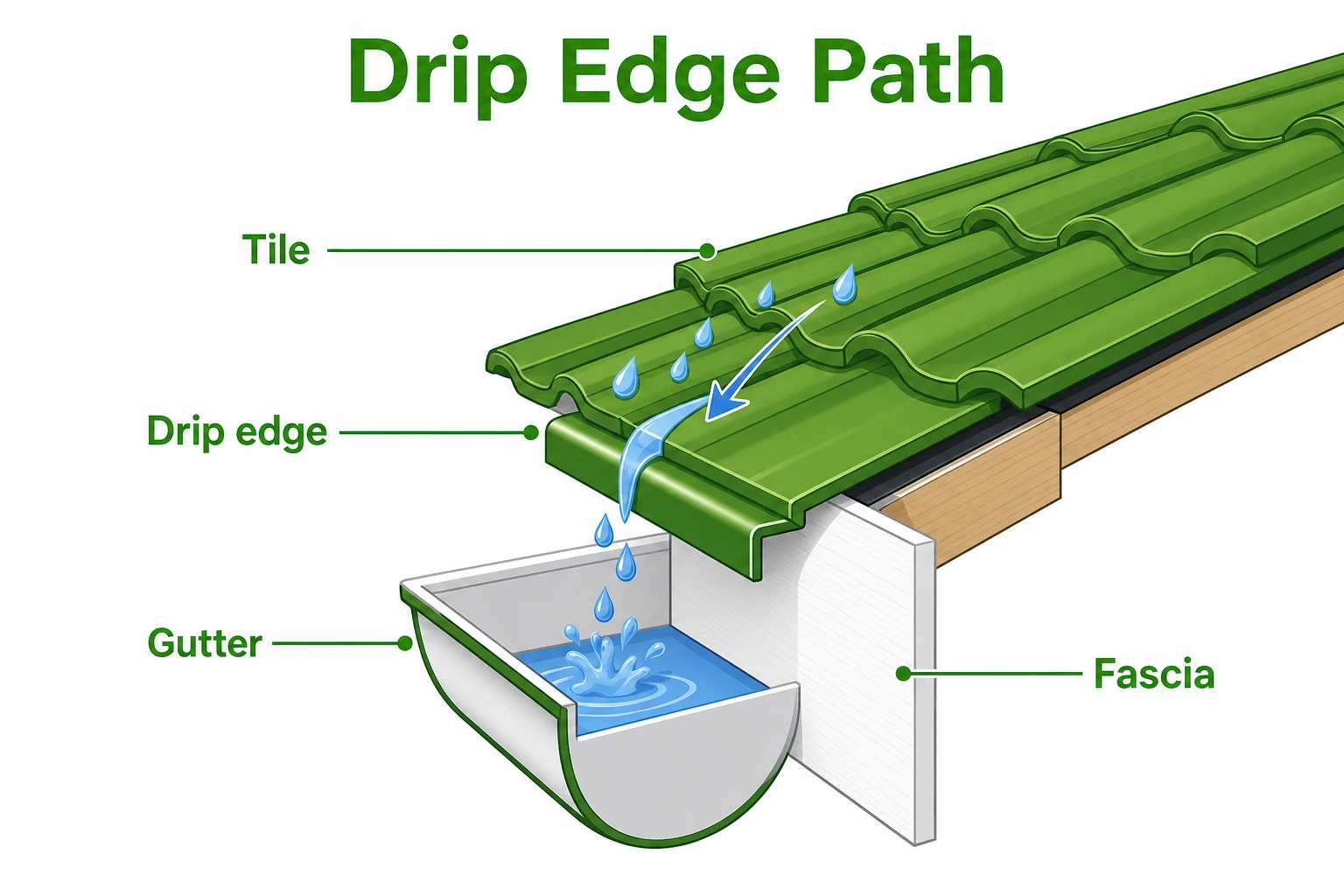
A roof drip edge is a finishing detail fitted along exposed roof edges, especially at the eaves where rainwater runs into the gutter. Its job is simple, but important. It guides water away from the roof edge so it falls into the gutter rather than tracking back towards the timber, felt, fascia and soffit.
On a pitched tiled or slate roof, rainwater moves down the roof surface and reaches the lowest edge. If that edge is not properly protected, surface tension can make water cling to the underside of tiles or edging materials. From there, it can run backwards into places that are not designed to stay wet.
A correctly fitted drip edge helps break that water path. It creates a neat projection or change of angle so rainwater drops clear. It also helps protect the lower roof edge from wind driven rain, splashback and repeated wetting during heavy showers.
If you want a broader explanation of the part itself, Acorn Roofing has a separate guide on what a drip edge in roofing is. This article focuses on the leak risk when that detail is missing, damaged or poorly positioned.
How water gets behind the roof edge
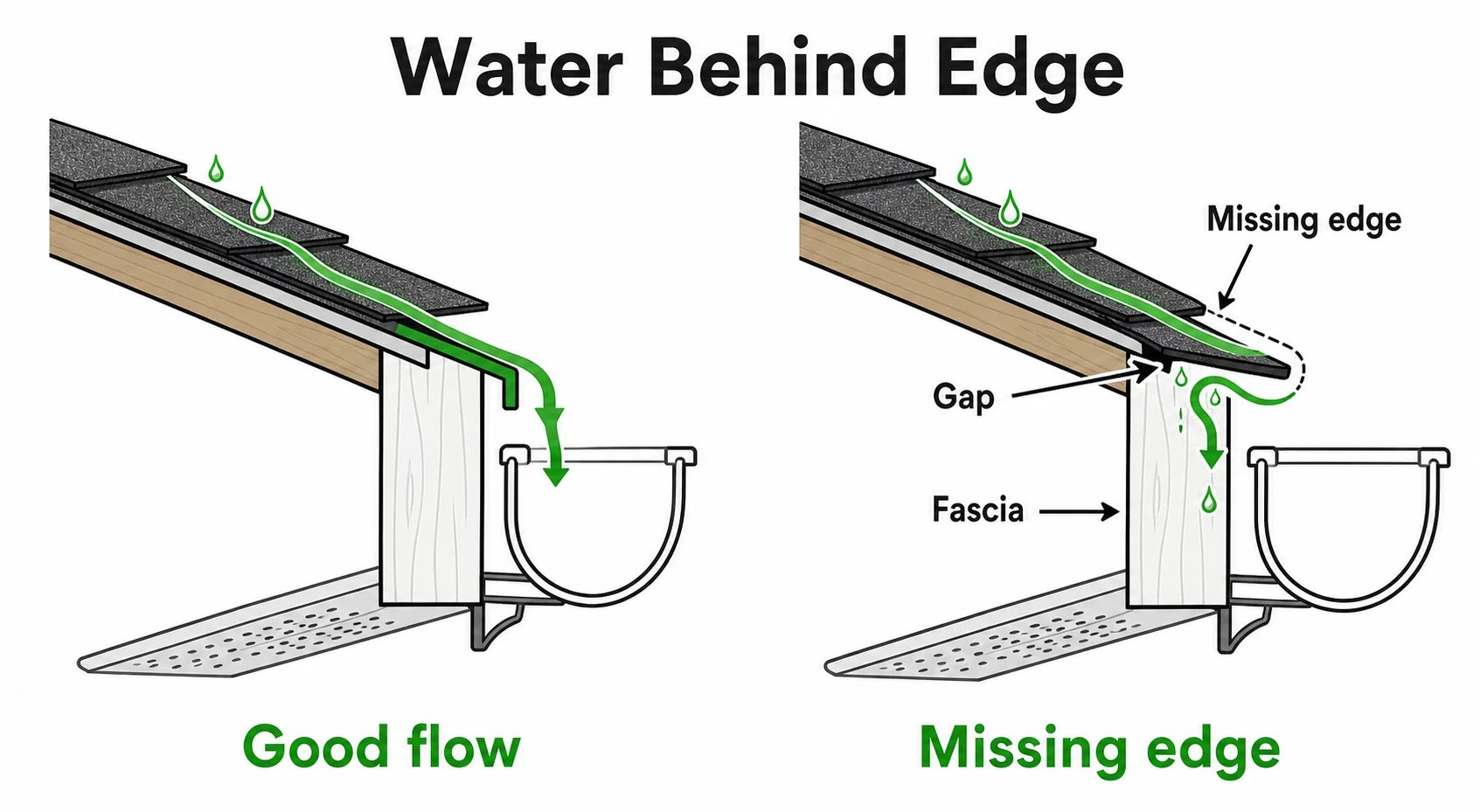
Water does not need a large opening to cause trouble. A narrow gap at the roof edge can be enough, especially during prolonged rain or when wind pushes water sideways under the first row of tiles. Once water gets behind the edge, gravity and capillary action can carry it along timber, underlay, fascia boards and fixing points.
Common drip edge issues include missing sections, loose edging, poor overlap, incorrect positioning and damage caused by age or previous repairs. Sometimes the edge detail was never fitted properly in the first place. In other cases, a roof repair, gutter repair or fascia replacement may have disturbed the roof edge and left a small vulnerable gap.
The problem can be more noticeable where gutters sit too high, too low or too far from the roof edge. If water overshoots the gutter or runs behind it, the fascia can stay damp after every shower. Over time, that repeated soaking can encourage staining, soft timber, peeling paint and damp patches inside the roof space.
Blocked gutters can make matters worse because standing water and overflow put more moisture around the eaves. If the symptoms seem gutter related as well as roof related, it may help to compare them with the signs covered in Acorn Roofing’s guide to gutters that need repair.
Signs your drip edge may be missing or damaged
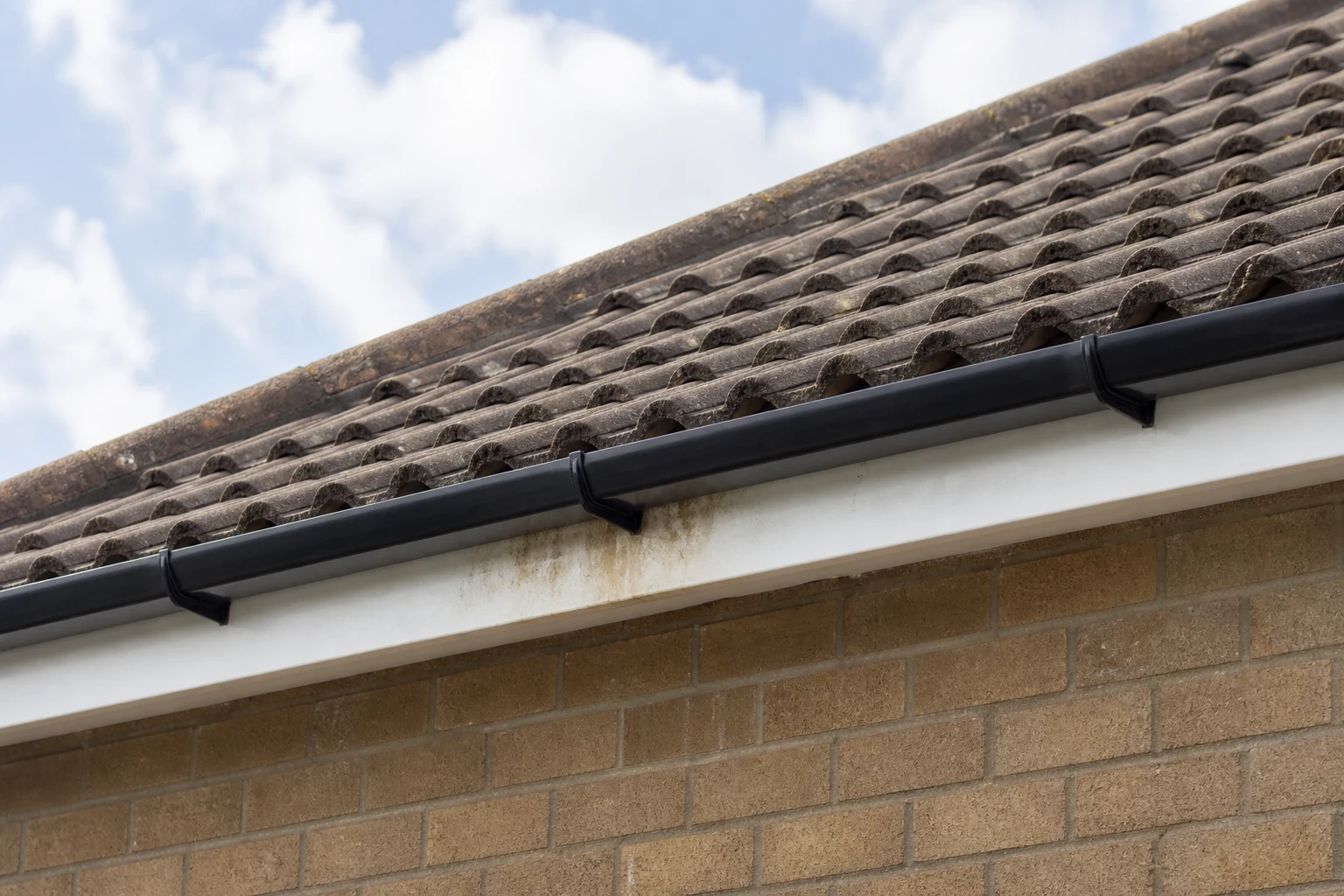
You do not need to climb onto the roof to notice that something may be wrong. In fact, you should avoid going onto a roof unless you are trained and properly equipped. Many drip edge problems can be suspected from ground level or from inside the loft.
Warning signs can include:
- Water running behind the gutter during rain
- Staining, damp marks or rot on fascia boards
- Soffits that look damp, swollen or discoloured
- Drips appearing near the eaves after heavy rain
- Damp insulation or staining at the lower edge of the loft
- Tiles or slates at the bottom edge that look uneven or lifted
- Gutters overflowing even after they have been cleared
These signs do not always mean the drip edge is the only issue. A slipped tile, torn underlay, blocked gutter, damaged verge, failed flashing or poor ventilation can produce similar symptoms. That is why a proper inspection matters. The value is not just in seeing the obvious damp patch, but in tracing the water back to the point where it is getting in.
It is also worth noting that leaks near the eaves can travel before they appear indoors. A wet patch on a ceiling may be some distance from the roof edge problem that caused it. Water can follow rafters, battens, underlay folds or service penetrations before it finally becomes visible.
Why small drip edge gaps can become bigger roof repairs
A missing drip edge rarely causes dramatic damage overnight. The risk usually builds through repeated wetting. Each rainfall sends a little more water into the wrong area, and materials that should dry quickly may stay damp for longer than they should.
Fascias and soffits are particularly exposed because they sit directly below the roof edge. If water regularly runs behind the gutter, the fascia can become stained or softened. Fixings may loosen, gutter brackets can pull away and paint or protective finishes may fail sooner. Once timber has been affected, the repair may need to deal with both the roof edge and the supporting boards below it.
The roof covering can also suffer. At the lower edge, underlay and battens may be exposed to moisture that they were never meant to handle constantly. If the underlay deteriorates, it can allow more water into the roof space. If battens soften, tiles or slates may become less secure.
Inside the home, the first signs might be a musty smell in the loft, damp insulation or staining at the wall plate area. These are easy to miss because they are often hidden from everyday view. By the time water marks appear on a ceiling or upper wall, the problem may have been active for a while.
This is why small roof defects are worth dealing with promptly. Acorn Roofing explains the same principle in its article on the hidden costs of ignoring small roof repairs.
When a roofer should inspect the roof edge
A roofer should inspect the roof edge if you can see water running behind the gutter, damp marks around fascias or soffits, or any staining in the lower part of the loft. It is also sensible to arrange an inspection after roof edge work, gutter replacement or fascia and soffit repairs if symptoms continue.
During an inspection, a roofer will look at how the roof covering, underlay, drip edge, gutter and fascia interact. That matters because these parts work as a system. A drip edge that looks present may still be poorly positioned. A gutter that looks clear may still sit at the wrong height. A tile that looks sound from the ground may be allowing water underneath during wind driven rain.
A professional inspection can also separate drip edge issues from other common leak sources. For example, damp at the eaves might come from broken tiles, failed underlay, blocked gutters, roof pitch problems or ageing roofline boards. Guessing can lead to repeat repairs, while a careful inspection gives you a clear route to putting the issue right.
If you are deciding whether to investigate something yourself or call a roofer, Acorn Roofing’s guide to DIY versus professional roof repairs explains where the boundary usually sits.
How drip edge repairs are usually approached
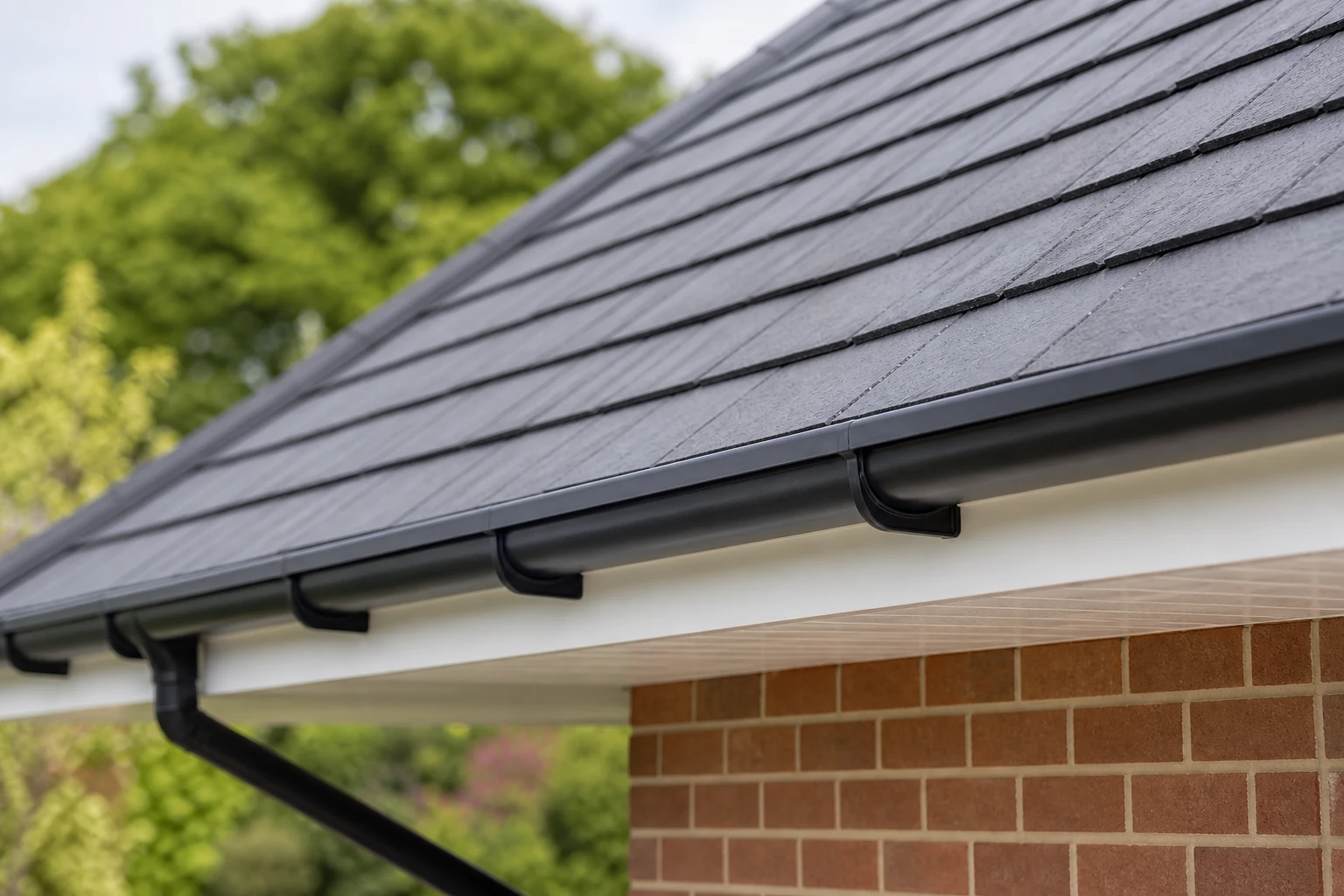
The right repair depends on the roof type, the existing edge detail and the condition of nearby materials. In some cases, the roofer may be able to correct or replace the drip edge detail and make sure water is directed properly into the gutter. In others, damaged underlay, battens, tiles, fascias or guttering may also need attention.
A good repair is not just about adding a strip of material at the edge. The roofer needs to check that there is suitable overlap, that water has a clear route off the roof, that the gutter is aligned correctly and that any affected timber or roofline components are sound. If a previous repair has left gaps, those gaps need to be resolved without trapping moisture or pushing water somewhere else.
For tiled and slate roofs, the lower courses may need to be lifted carefully so the edge detail can be assessed and corrected. For flat roof areas, the edge design is different, and the repair may involve trims, outlets or upstands rather than the same type of drip edge used on pitched roofs.
If you already have signs of a leak, the most useful next step is a proper assessment rather than a guess from the ground. Acorn Roofing can inspect the cause and advise on suitable roof repairs where the roof edge, guttering or surrounding materials need attention.
- A roof drip edge helps rainwater drop into the gutter instead of tracking back under tiles or into the fascia.
- Small gaps, missing sections or poor positioning can let water reach timber, underlay, fascias and soffits.
- Damp fascias, stained soffits, water behind gutters and loft staining are all signs worth checking.
- A roofer should inspect the whole roof edge system, including tiles, underlay, gutter position and roofline boards.
- Prompt repair can stop a minor roof edge issue becoming a wider leak problem.
Frequently asked questions
Can a missing drip edge really cause a roof leak?
Yes. If water can curl back under the roof edge instead of dropping into the gutter, it may reach the underlay, battens, fascia or roof space. The leak may be gradual, but repeated wetting can cause damp and damage over time.
Is a drip edge the same as a gutter?
No. The gutter collects and carries rainwater away, while the drip edge helps guide water off the roof edge and into the gutter. They work together, but they are different parts of the roof drainage system.
Can I check a drip edge from the ground?
You may be able to spot symptoms from the ground, such as water running behind the gutter or damp fascias. However, confirming the cause usually needs a roofer to inspect the roof edge safely and closely.
Does every roof need the same drip edge detail?
No. The right detail depends on the roof type, roof covering, gutter position and existing construction. Pitched tiled roofs, slate roofs and flat roofs can all need different edge solutions.
Concerned about a leaking roof edge?
If you have noticed water behind the gutter, damp fascias or signs of a leak near the eaves, Acorn Roofing can inspect the problem and explain the right repair clearly.