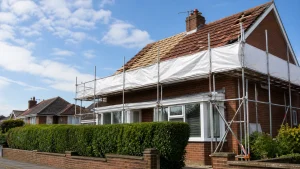
A slipped slate is one of those roof faults that is easy to spot from the ground. One slate sits lower than the rest, a dark gap appears, or a small piece of slate ends up in the garden after bad weather.
The good news is that a slipped slate does not always mean the whole roof is failing. When the surrounding roof is still sound, experienced roofers can often repair the defect carefully, protect the roof beneath, and keep disturbance to the wider slate covering to a minimum.
Why slates slip in the first place

Slate roofs are built in overlapping courses. Each slate helps shed rainwater onto the slate below, while fixings and battens hold the covering in place. When one part of that system weakens, a slate can move out of position.
Common causes include corroded nails, cracked slate, storm movement, impact damage, loose battens, or previous repairs that were not finished neatly. On older roofs, nail fatigue is a common reason. The slate itself may still be usable, but the fixing holding it has failed.
Weather can make the problem more obvious. Wind can lift a loose slate, driving rain can find the exposed gap, and frost can widen small cracks. A single slipped slate may look minor, but the opening it leaves can allow water to reach the underlay, battens or roof space.
This is why a slipped slate is worth checking promptly. It is not about panic. It is about stopping a small visible defect from becoming damp staining, timber damage or a more awkward repair later.
How roofers assess a slipped slate before repairing it
A careful repair starts with inspection, not guesswork. The roofer will look at the slipped slate, the slates around it, the fixing points, the underlay if visible, and any signs of water tracking. The aim is to work out whether the issue is isolated or part of a wider pattern.
They will usually check whether the slate is intact, whether it can be refixed, and whether neighbouring slates have lifted, cracked or lost their fixings. They may also look for sagging courses, worn ridges, blocked gutters, loose flashings, or moss and debris that could be holding moisture on the roof.
This stage matters because slate repairs are not all the same. A cleanly slipped slate on an otherwise serviceable roof is a different job from a roof where several courses are loose or the battens beneath have deteriorated. Skilled roofers know when to keep the work focused and when to advise a broader repair.
If you are comparing roofers who work with slate roofs, ask how they will assess the surrounding area as well as the obvious slipped slate. The best answer is usually calm, specific and practical.
The repair method used to avoid unnecessary disturbance

The basic principle is simple. Fix the slipped slate without lifting more of the roof than necessary. In practice, this takes the right access, the right tools, and a good understanding of how slate behaves.
Where the slate is reusable, the roofer may carefully ease it back into position and secure it using an appropriate slate repair fixing. If the original nail has failed, a new fixing method may be used so the slate is held neatly without stripping back a large section of roof.
If the slate is cracked or weakened, it is normally replaced with a matching slate where possible. The roofer will remove the damaged piece carefully, protect the surrounding slates, and fit the replacement so it sits in line with the existing courses. The overlap must be right, because that is what guides rainwater down the roof surface.
On a sound roof, this kind of targeted repair avoids unnecessary disruption. It also keeps the appearance of the roof consistent, which matters on slate coverings where uneven lines or poorly matched materials can stand out.
For wider context on when a focused fix is suitable, Acorn Roofing has more information about its roof repair service.
Why professional slate repair is different from a quick patch
A slipped slate can tempt homeowners into thinking it only needs pushing back into place. The problem is that roof coverings work as a system. If a slate has slipped, something caused it to move, and simply moving it back may not restore the weather protection.
Professional roofers look at the fixing, the lap, the slate thickness, the surrounding courses and the route water will take during heavy rain. They also work from suitable access, which reduces the risk of damage to neighbouring slates. Slate can be strong in use but brittle under the wrong pressure.
A quick patch may also trap water, create a raised edge, or put stress on adjacent slates. These issues are not always obvious from the ground, but they can shorten the life of the repair. A neat slate repair should sit flat, shed water properly, and blend into the surrounding roof.
Safety is another reason to avoid do it yourself roof work. Even a small repair can involve fragile materials, awkward angles and unpredictable weather. If you are weighing up the risks, this guide to professional roof repairs versus DIY work is a useful starting point.
When a slipped slate points to a wider roof issue

Many slipped slate repairs are local and straightforward for a trained roofer. However, sometimes the visible slate is only the first clue. If several slates have moved, if the roof covering looks uneven, or if there are damp marks indoors, the roofer may recommend a broader inspection.
Older slate roofs can suffer from nail fatigue across larger areas. This can mean more slates are likely to slip over time, even if only one has fallen so far. Battens, underlay, flashings and gutters can also affect how well the roof copes with rain.
That does not automatically mean a new roof is needed. A responsible roofer will explain what they have found, what can be repaired, and what should be monitored. In some cases, several local repairs may extend the useful life of the roof. In others, replacement becomes the more sensible option because the roof covering has reached the end of its serviceable condition.
The key is proportion. Good roofers do not turn every slipped slate into a major project. They match the recommendation to the condition of the roof.
How to help prevent more slipped slates

Homeowners cannot control every roof fault, especially after high winds or years of weather exposure. But regular attention can help catch small issues before they become more disruptive.
- Look for slates sitting lower than the surrounding courses.
- Check for slate fragments on the ground after bad weather.
- Watch for damp patches, ceiling stains or musty smells in roof spaces.
- Keep gutters clear so rainwater can drain away properly.
- Arrange a professional inspection if more than one slate appears loose.
Gutters, fascias and soffits also play a role in roof health. If water cannot leave the roof edge cleanly, it can contribute to staining, damp timber and unnecessary pressure around the lower roofline.
It is sensible to treat visible movement as an early warning, not a disaster. A prompt inspection gives you better options and often keeps the repair focused on the affected area.
- A slipped slate does not always mean the whole roof needs replacing.
- Careful roofers inspect the surrounding slates, fixings and roof condition before starting work.
- A targeted slate repair can often restore weather protection while keeping disturbance low.
- Do it yourself slate work can damage neighbouring slates and may not solve the underlying cause.
- Multiple slipped slates, damp signs or widespread nail failure may point to a wider roof issue.
Frequently asked questions
Can one slipped slate cause a leak?
Yes, it can. The gap left by a slipped slate may allow rain to reach the underlay, battens or roof space. It may not leak immediately, but it should be checked before repeated bad weather makes the problem worse.
Can the same slate be reused?
Sometimes. If the slate is sound and the problem is mainly the failed fixing, a roofer may be able to refit it securely. If it is cracked, thin or badly damaged, replacement is usually the better option.
Will repairing one slate disturb the rest of the roof?
A skilled roofer will aim to disturb as little of the surrounding roof as possible. The exact method depends on access, slate condition and how the original fixing has failed.
How do I know if my slate roof needs more than a small repair?
Signs include several slipped or cracked slates, uneven roof lines, repeated leaks, damp staining inside, or loose materials after windy weather. A roofer can inspect the roof and explain whether a local repair is enough.
Need a slipped slate checked?
Acorn Roofing can assess slipped, cracked or loose slates and advise on the most sensible repair for your roof.